

If we were to compare the MBA application to a house viewing, your resume is the foyer — the first space the admissions committee steps into. A strong foyer (resume) means they enter every other room (essay) already impressed, while a weak one means each room (essay) has to work harder to win them over. They’ll still walk through every room of your application regardless, but a stronger first impression wins you enthusiastic readers, eager to know more about you as they read further.
To create a favorable first impression, the best resume format is visually appealing. A clutter free resume makes it easier for the reader to learn the best about your experiences.
We’ve written several blogs on foolproof formatting. [Access our resume cheat sheet HERE]
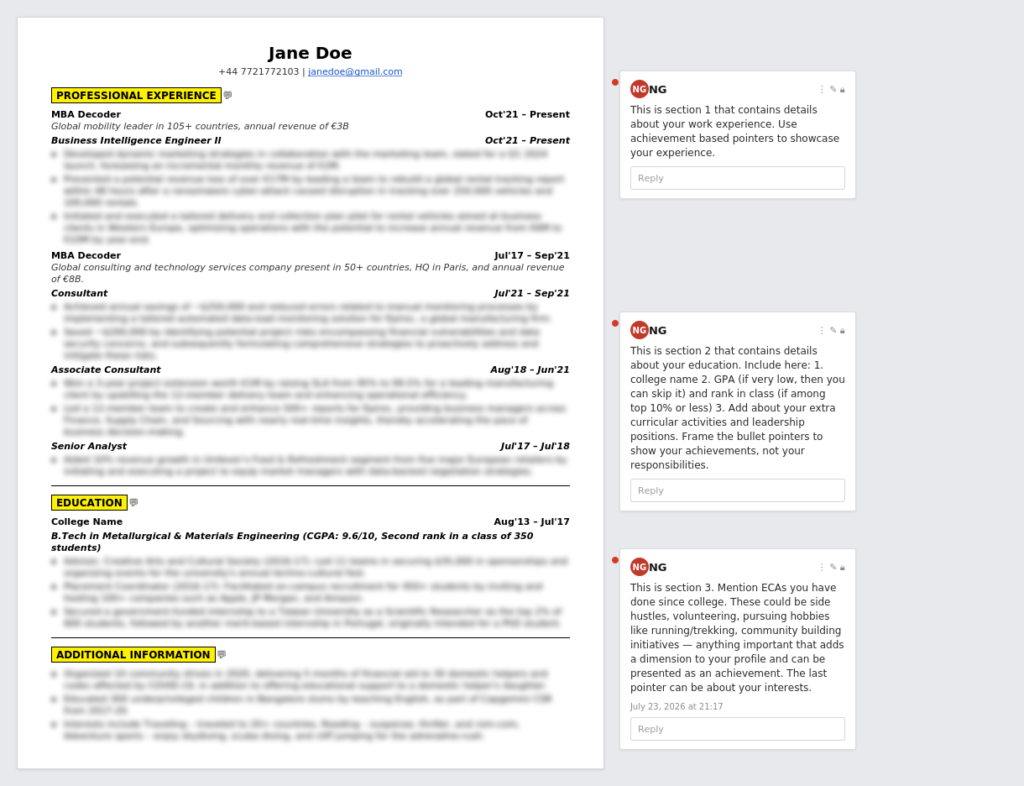
But applicants frequently ask which sections to include in their resume. After scouring resume recommendations from several top B-schools over the years, we recommend a format with these sections:
1. Professional Experience — List your jobs in reverse chronological order. For each role, write bullet points that highlight your key achievements on specific projects, and quantify them wherever possible. If you’re an entrepreneur running a side hustle you’d like to include, you can add it here, or in the Additional Information section instead, depending on how noteworthy the engagement is and whether you’d rather highlight it separately.
2. Education — List your education starting from college. If you’ve completed a master’s degree or certifications like the CFA or PMP, mention them here too.
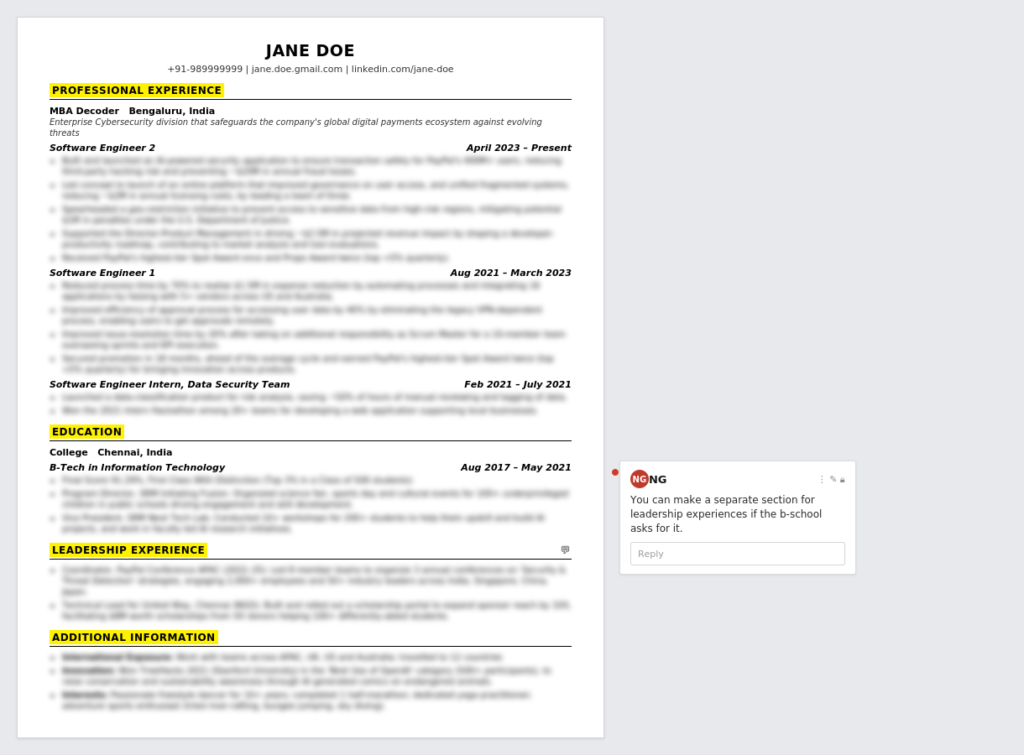
Also mention any leadership roles you held and the impact you created — don’t just state that you were elected to a club; explain what impact you were able to create in that role.
3. Additional Information — Use this section for extracurricular activities, side hustles, community initiatives, professional or social clubs, sports, or other achievements you’re proud of. The focus shouldn’t be on stating that you do the activity, but on what your achievements and impact were.
In this blog, we’ve put together a visual representation of what a visually appealing layout and format looks like.
But, before that, as a recap, a few other things you should remember:
- Leave white space — don’t suffocate the resume with excessive information
- Manage left- and right-hand alignment
- Leave margins on all four sides
- Keep font size and style consistent throughout
- Maintain consistent formatting across entries (same bullet style, same date format, etc.)
Some b-schools like Darden ask for a separate leadership section, and we like to include this section if the applicant has a impressive leadership experiences outside of work that deserve to be highlighted.
Read our other Blogs on Resumes:
How to write a compelling Resume for MBA Admission
Five Mistakes you would never want to make in your MBA Resume
Your MBA Resume Cheat Sheet